
July 27, 2026 · 6 min read
QR Codes vs Barcodes: What's Actually Different and When to Use Which
The practical difference between QR codes and 1D barcodes — how much data each holds, where scanners find them, and which one you actually want for menus, inventory, event tickets, and packaging.
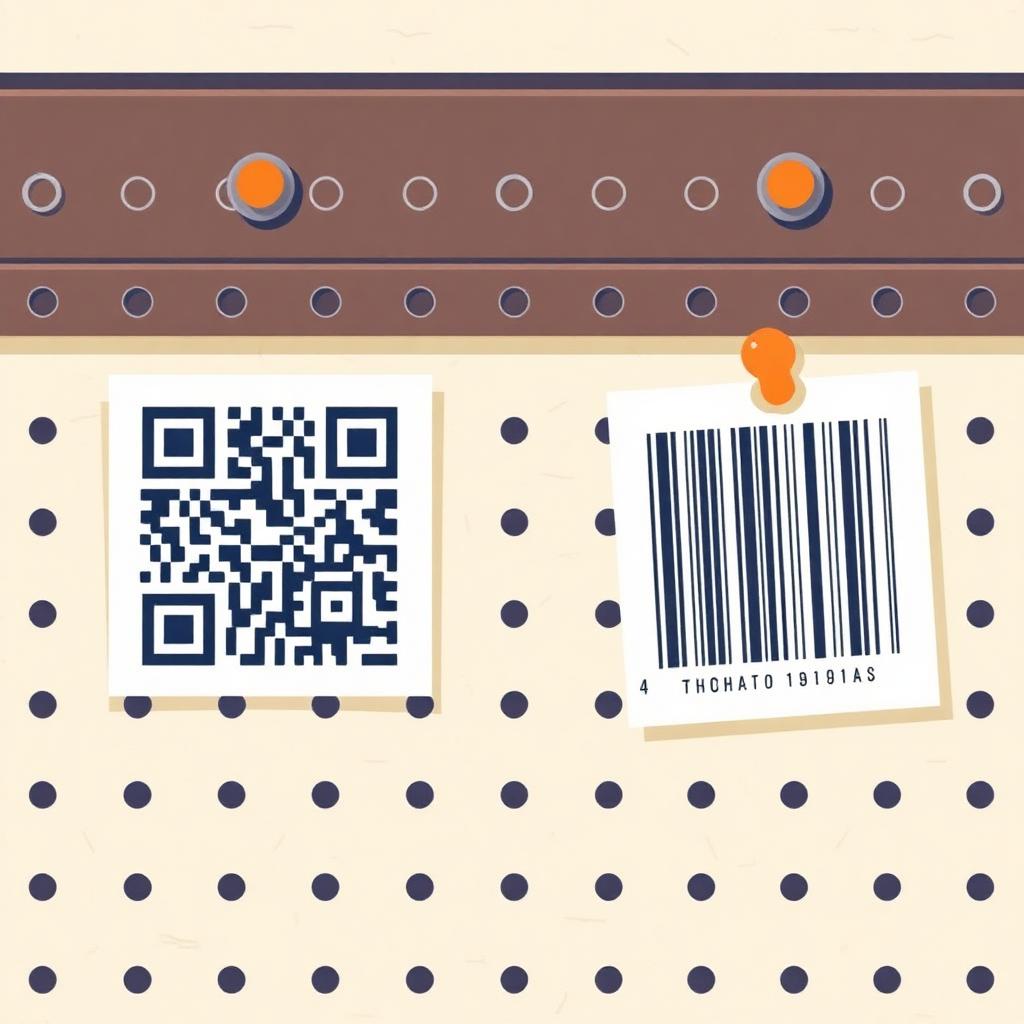
Two things get called "barcodes" casually and they aren't the same thing. The striped rectangle on a cereal box is a 1D barcode. The square with the pixellated pattern on a restaurant menu is a QR code. They both encode data as an image that a scanner can read, but they're built for genuinely different jobs.
Here's the practical version, minus the technical rabbit hole.
1D barcodes: short numbers, industrial scanners
A traditional barcode encodes a short string — usually a number, sometimes letters. The bars are essentially a font that a laser scanner can read very quickly. There are several standards:
- EAN-13: the 13-digit code on retail products worldwide. Every product SKU registered with GS1 gets an EAN.
- UPC-A: the 12-digit North American variant, essentially the same idea.
- CODE128: flexible — encodes letters, numbers, and symbols. Common in shipping labels and internal inventory.
- ITF-14: encodes the shipping-carton version of an EAN. Used on outer packaging.
The key thing about 1D barcodes is that they encode an identifier, not information. A barcode says "this is product 5901234123457." The scanner looks that number up in a database to find the actual price, description, stock level. Without the database, the barcode is meaningless.
Generate any of these in your browser with Barcode Generator — pick your format, type the value, download as PNG or SVG.
QR codes: hold real content, scanned by phones
A QR code is a 2D matrix that holds up to several thousand characters — enough for a URL, a wifi password, contact info in vCard format, plain text, even a small payload of arbitrary data. Because the data is denser, QR codes are self-contained in a way 1D barcodes aren't: the QR code is the information, not a pointer to it.
That's why they took over consumer-facing use. A menu QR code contains the actual menu URL. A wifi QR code contains the SSID and password. An event ticket QR code contains a signed token the venue can verify offline. No middleman database required.
The other big difference: QR codes can be scanned by any phone camera. Every iPhone and Android device from 2018 onwards has QR code recognition built into the camera app. Point, wait a beat, tap the notification. That's the reason menus and posters use QR codes and not EAN — nobody has an EAN scanner in their pocket. Generate a QR code via QR Code Generator.
Which one for which job
Retail products
EAN-13 or UPC-A. This is what point-of-sale scanners are calibrated for. The barcode ties to your inventory system, and every till in every shop already knows how to read it. You register the codes with GS1; the numbers aren't arbitrary.
Shipping and warehouse labels
CODE128 for flexibility (letters + numbers), ITF-14 for outer-carton shipping codes. Warehouse scanners can read both at speed from a moderate distance. Many logistics providers also add a QR code on the same label for phone-based scanning during last-mile delivery.
Menus, posters, flyers, business cards
QR code, essentially always. Encode the URL you want people to visit. Modern QR codes can be customised with a logo in the middle — the error correction lets the reader recover from a chunk of missing pixels — so they can look on-brand without breaking.
Event tickets, boarding passes, e-tickets
QR code (or its cousin, the Aztec code, which some airlines prefer). The QR code holds a signed token the venue can verify offline — no lookup required. If you're issuing tickets, the QR code encodes a unique per-ticket string; the venue scans, verifies the signature, checks the ticket hasn't been used.
Internal asset tracking
Either works. QR codes are more forgiving because they can be scanned by any phone your team already has. CODE128 works if you have a fleet of scan guns already.
Wifi passwords
QR code, using the WIFI: URL scheme. Print it, stick it on the router, and guests scan to connect without asking you to spell out a 20-character password. Modern phones recognize the format and offer to join the network automatically.
Practical gotchas
Print size matters
A QR code needs to be at least about 2 cm square at typical viewing distance for reliable scanning. On a business card, that means keeping the code big enough to be usable — a tiny QR code will fail from certain phones. For a menu on a wall, aim for 5 cm+ so people can scan from a nearby table.
1D barcodes have their own minimums — usually 80% of nominal EAN size at the smallest. Print them too small and the scanner can't resolve the individual bars.
Contrast
Black on white is the safe default. Some brand teams want colored QR codes; that works if the contrast is high enough. Beige on cream will fail. If you want to test, print a mockup and try scanning under normal indoor light.
Error correction (QR codes only)
QR codes have four error-correction levels (L, M, Q, H). Higher levels let the code recover from more damage but need more pixels. If you're going to add a logo in the middle, use Q or H. For a clean printed code, M is fine.
One more thing about QR codes
Because a QR code can encode any URL, malicious QR codes are a real thing — someone stickers over a legitimate menu QR with one pointing at a phishing site. Not a reason to avoid QR codes; just a reason to look at the URL your phone shows you before tapping through. Same rule as any link, essentially.
Generate honest ones for yourself, and check unfamiliar ones you scan. That's the whole trick.
Frequently asked questions
- Can QR codes replace barcodes for retail products?
- In principle yes, but retail infrastructure is built around EAN and UPC barcodes. The till scanner, the inventory system, the supplier catalogues — all use the barcode number. Adding a QR code alongside is common; replacing the barcode isn't practical for retail products.
- How much data can a QR code hold?
- Up to about 4,300 alphanumeric characters at the largest size and lowest error correction — enough for a long URL, wifi credentials, or a short document. In practice most QR codes hold a URL of 50–100 characters, which keeps the code small and easy to scan.
- Do QR codes expire?
- The QR code image itself is just an encoded string — it doesn't expire. But if the URL it points to changes or is taken down, the QR code becomes dead. Dynamic QR codes (which use a redirect service) let you change the destination without reprinting; static QR codes encode the URL directly.
- What barcode format should I use for internal inventory?
- CODE128 is the standard choice — it encodes letters, numbers, and symbols; scans reliably from most industrial scanners; and doesn't require GS1 registration. Reserve EAN/UPC for products you actually sell at retail.